Category: Articles

  • Embracing a SymMind (Symbiotic Intelligence Mindset)

    | Instead of seeing AI as a replacement, explore how it can augment human capabilities and improve decision-making.

    Introduction: Navigating Change in an AI-Driven World

    In today’s rapidly evolving landscape, artificial intelligence (AI) is not merely a tool for automation; it represents a profound shift in how we work, collaborate, and innovate. The true potential of AI lies not in replacing human workers but in augmenting their capabilities—empowering people to focus on creativity, complex problem-solving, and emotional intelligence. As organisations face this transformative change, the challenge becomes: How do we maximise the synergy between human intuition and AI’s efficiency?

    To thrive in this new era, businesses must move beyond traditional performance metrics, which often fail to capture the full value of AI-human collaboration. By redefining success criteria and embracing a Symbiotic Intelligence Mindset (SymMind)—where humans and AI work in harmony—companies can unlock unprecedented levels of innovation, agility, and productivity.

    Welcome to the Navigating Change in an AI-Driven World series. In this collection of articles, we will explore the critical skills, strategies, and ethical considerations needed to succeed in a future where AI plays a central role. From developing emotional intelligence in the age of automation to using AI for ethical decision-making, we’ll provide insights and practical advice to help you adapt, thrive, and lead in the AI-driven workplace.

    Introduction: What is SymMind?

    The world is moving towards an AI-enhanced future, and to thrive, individuals and organisations must embrace a Symbiotic Intelligence Mindset (SymMind)1. This mindset emphasises collaboration between humans and AI, rather than replacement. A SymMind  is built on three core pillars: Augmentation, Not Automation, Continuous Learning & Adaptability, and Trust & Transparency in AI Use.

    KEY FACTS

    • 75% of executives believe that AI will significantly change the nature of their workforce by 2030. 2
    • Symbiotic Intelligence refers to the complementary relationship between humans and AI, leveraging their unique strengths to drive innovation and solve complex problems. 3

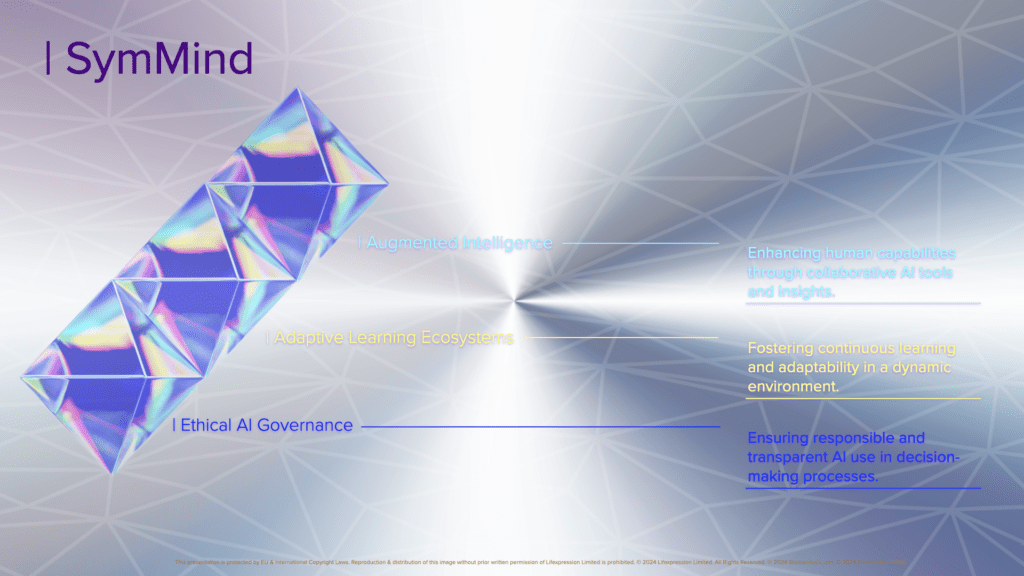
    SymMind is a  framework that encourages a strategic balance between human creativity and AI capabilities. This mindset can be broken down into three core pillars:
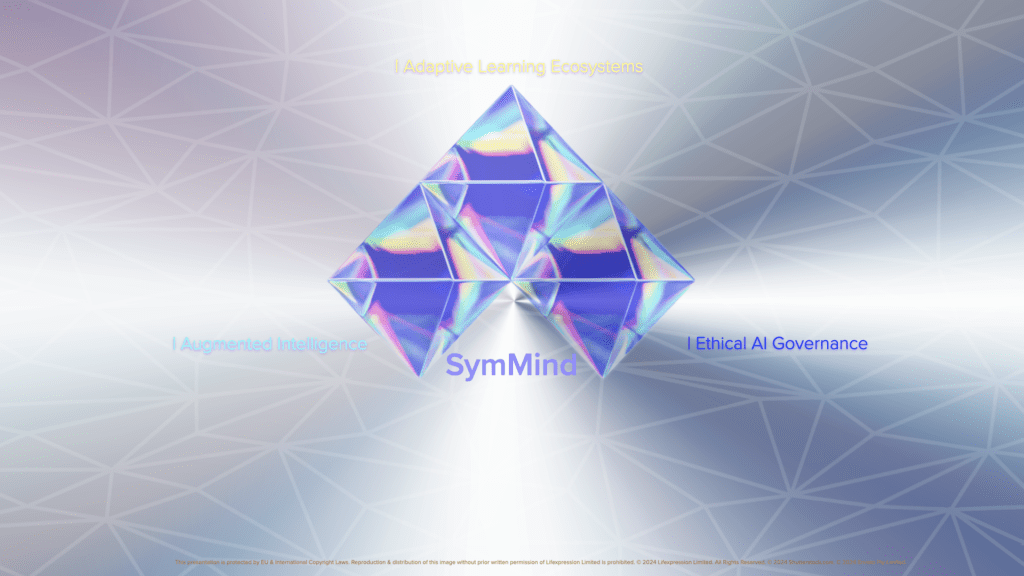
    Augmentation, Not Automation  – Augmented Intelligence

    Focuses on how AI can enhance human potential rather than replace jobs. It promotes a partnership where AI handles data-heavy or repetitive tasks, while humans bring emotional intelligence, problem-solving, and creative insight.

    This pillar emphasises enhancing human capabilities through AI collaboration. It focuses on tools and technologies that assist human decision-making, creativity, and problem-solving, rather than replacing jobs. The goal is to create a synergistic relationship where AI enhances the unique strengths of human workers.

    Example Behaviours: 

    • Employees leverage AI for analysis but make decisions using critical thinking and emotional awareness.
    • Cross-functional teams are formed with both data scientists and creative strategists to solve complex problems.
    Continuous Learning & Adaptability – Adaptive Learning Ecosystems

    A key element of the SymMind framework is promoting a culture of continuous learning, where employees are encouraged to understand AI tools and evolve their skill sets to complement AI.

    This pillar encourages organisations to cultivate an environment of continuous learning and adaptation. By integrating AI-driven personalised learning platforms, employees can upskill and remain agile in the face of changing technologies and market dynamics. This approach fosters a culture of lifelong learning, essential for thriving in an AI-driven landscape.

    Example Behaviours:

    • Offering regular training to employees on how to use AI tools effectively.
    • Encouraging exploration of new roles or skills that blend human expertise with AI’s analytical capabilities.

    Trust & Transparency in AI Use – Ethical AI Governance

    For true human-AI collaboration, organisations must foster trust and transparency by demystifying how AI works and ensuring that its use aligns with ethical standards.

    This pillar highlights the need for ethical considerations in AI deployment. It promotes transparency, accountability, and fairness in AI applications, ensuring that organisations maintain trust among employees and customers. Establishing ethical guidelines and regular assessments of AI systems is critical for responsible decision-making and fostering a culture of integrity.

    Example Behaviours: 

    • Regular AI literacy sessions to build understanding across teams.
    • Leaders share clear, transparent AI deployment policies to ensure employees feel secure and empowered by the technology.

    SymMind Overview

    Pillar 1: Augmentation, Not Automation

    Augmented Intelligence: Enhancing human capabilities through collaborative AI tools and insights.

    Empowering Human Potential with AI Support

    SymMind sees AI as a tool to enhance human capabilities rather than replace them. The goal is not to automate jobs out of existence but to augment the way we work, think, and solve problems. AI assists with data processing, analysis, and even decision-making, allowing humans to focus on creativity, empathy, and strategic insight.  

    A Shift in Perspective

    Organisations are increasingly viewing AI as a collaborative partner rather than a replacement for human workers. SymMind is about recognising that AI can augment human skills by handling repetitive or highly data-driven tasks. In turn, this frees up humans to focus on areas where they truly excel, such as critical thinking, creativity, and leadership.

    Companies like Amazon and Microsoft use AI to streamline logistics and data analysis, allowing employees to focus on strategic innovation rather than mundane tasks. AI is integrated into operations to complement human effort, not replace it.

    Real-World Alignment: 

    Augmentation, not automation mirrors strategies seen in companies adopting Robotic Process Automation (RPA) 3 for administrative processes while keeping humans in the loop for complex decision-making.

    KEY FACTS

    • Companies using AI for augmentation report 10-15% higher productivity gains compared to those focused solely on automation. 4
    • An MIT study found that AI can enhance worker productivity in tasks like decision-making by as much as 20%. 5
    Pillar 2: Continuous Learning & Adaptability

    Adaptive Learning Ecosystems: Fostering continuous learning and adaptability in a dynamic environment.

    Thriving in a World of Perpetual Change

    In an AI-driven world, change is constant. Developing this mindset means committing to continuous learning and cultivating adaptability. AI tools evolve rapidly, and so must the skills and strategies we use alongside them. Lifelong learning becomes not a choice but a necessity, with workers needing to update their skills regularly to remain competitive.  

    KEY FACTS:

    • The World Economic Forum predicts that by 2025, 50% of all employees will need reskilling.6
    • Continuous learning is a hallmark of resilient organisations and individuals, with AI-enabled learning platforms providing personalised development pathways.7

    The Lifeblood of AI-Era Organisations

    Organisations that embrace this mindset understand that *lifelong learning* and the ability to adapt are critical for employees in an AI-powered world. AI is evolving rapidly, and workers need to evolve with it by continuously updating their skillsets.

    Google and IBM have embedded continuous learning cultures within their organisations, offering employees access to AI-driven learning platforms like Coursera and Udacity. These platforms provide personalized learning paths, driven by AI, to upskill employees and ensure they remain at the cutting edge of innovation. 8

    Real-World Alignment: 

    SymMind ties in perfectly with global trends like the rise of AI-augmented learning platforms and micro-learning initiatives that focus on short, targeted lessons to keep skills relevant in real-time.

    Pillar 3: Trust & Transparency in AI Use

    Ethical AI Governance: Ensuring responsible and transparent AI use in decision-making processes.

    Building Trust in the Age of Intelligent Machines

    This mindset is rooted in trust. For humans to collaborate effectively with AI, transparency in how AI systems function and make decisions is crucial. Trust is built through clear communication about AI capabilities and limitations, ethical use, and maintaining data privacy standards. Without trust, the adoption of AI in critical areas like healthcare, finance, and governance could face significant resistance.

    KEY FACTS:

    • 40% of consumers worry about the ethical use of AI and its implications for privacy and decision-making. 9
    • Companies that are transparent about their AI processes report 25% higher user adoption rates. 10
    • The EU AI Act, set to regulate AI systems in the coming years, emphasises the importance of transparency and accountability in AI applications. 11

    Building Ethical AI Ecosystems

    For organisations to fully embrace AI, trust and transparency are essential. SymMind promotes transparency in AI decision-making processes, emphasising the ethical use of data, privacy concerns, and clear communication about AI’s role in business operations.

    Salesforce has been a leader in AI ethics, releasing guidelines to ensure that AI systems are transparent and explainable to both users and customers. Their Ethical AI Framework provides a clear roadmap for how AI should be developed and deployed, ensuring decisions are traceable and understandable. 12

    Real-World Alignment: 

    SymMind aligns with the push towards ethical AI frameworks, as seen with the European Union’s AI Act, which enforces transparency, accountability, and fairness in AI systems. It’s about ensuring that AI enhances human trust rather than creating new concerns.

    Integrating SymMind into Organisational Culture

    In many industries, organisations are adopting elements of SymMind by balancing human and machine strengths. It’s about reshaping the workforce with AI as an ally, a tool that empowers rather than displaces workers. SymMind can help organisations structure this integration through:

    • AI-augmented roles: Where AI assists in data processing, freeing up time for strategic work.
    • AI-enabled continuous learning: AI-powered systems for upskilling employees in real-time.
    • Trust-building through transparency: Ensuring AI decision-making processes are understood and embraced by employees and stakeholders.

    Leading companies already integrate SymMind by using AI to augment their workforce, investing in employee upskilling, and fostering an open, trust-based culture around AI. From personalised learning programmes to AI-augmented creative processes, the examples are growing.

    KEY FACTS

    • Salesforce has integrated AI tools that augment sales representatives’ capabilities by automating administrative tasks, freeing up time for strategy and client relations. 13
    • Siemens uses AI in predictive maintenance, allowing engineers to focus on higher-level problem-solving and innovation. 14
    How Organisations are Embracing Symbiotic Intelligence

    Several industries are actively embracing symbiotic intelligence of AI-human collaboration, leveraging the unique strengths of both to enhance productivity, innovation, and decision-making. Here are some notable examples:

    Healthcare

    Example: IBM Watson Health combines AI with human expertise to assist doctors in diagnosing diseases and recommending treatments. The integration of AI helps analyse vast amounts of medical data, enabling healthcare professionals to make more informed decisions. 15

    Finance

    Example: JPMorgan Chase employs AI to streamline processes such as fraud detection, risk assessment, and customer service. Their COiN platform uses AI to analyse legal documents, freeing up legal teams to focus on more strategic tasks. 16

    Manufacturing

    Example: Siemens utilises AI and machine learning to optimise production processes. By combining AI insights with human operators’ skills, they enhance operational efficiency and product quality while empowering employees to engage in more complex problem-solving. 17

    Retail

    Example: Walmart employs AI-driven analytics to optimise inventory management and improve customer experience. Store associates are equipped with AI tools to make real-time decisions, ensuring that customer needs are met more effectively. 18

    Transportation and Logistics

    Example: UPS uses AI to optimise delivery routes and manage logistics operations. Their drivers leverage AI-driven insights to improve efficiency while still applying their judgment and experience in navigating complex delivery environments. 19

    Education

    Example: Coursera integrates AI to provide personalised learning experiences for students. By analysing learning patterns, AI can recommend tailored courses while instructors focus on delivering high-quality, engaging content. 20

    Customer Service

    Example: Zendesk offers AI-driven tools like chatbots that assist customer service representatives by handling routine inquiries. This allows human agents to focus on more complex customer issues, enhancing overall service quality. 21

    Energy

    Example: Enel leverages AI to predict energy consumption patterns and optimise grid management. Human operators work alongside AI to make strategic decisions that balance supply and demand effectively. 22

    These industries showcase a growing recognition of the importance of harmonising human skills with AI capabilities. By fostering a collaborative mindset, organizations can harness the strengths of both to drive innovation, improve efficiency, and create a more adaptive workforce.

    As these industries illustrate, the successful integration of AI and human intelligence not only enhances operational efficiency but also fosters a culture of innovation. To navigate this evolving landscape, organisations can adopt the Symbiotic Intelligence Mindset (SymMind)—a framework that encourages collaboration, continuous learning, and ethical AI use. This mindset empowers employees to embrace AI as a partner rather than a replacement, ultimately driving greater success in a technology-driven world.

    Symbiotic Intelligence: A New Paradigm for Human-AI Collaboration
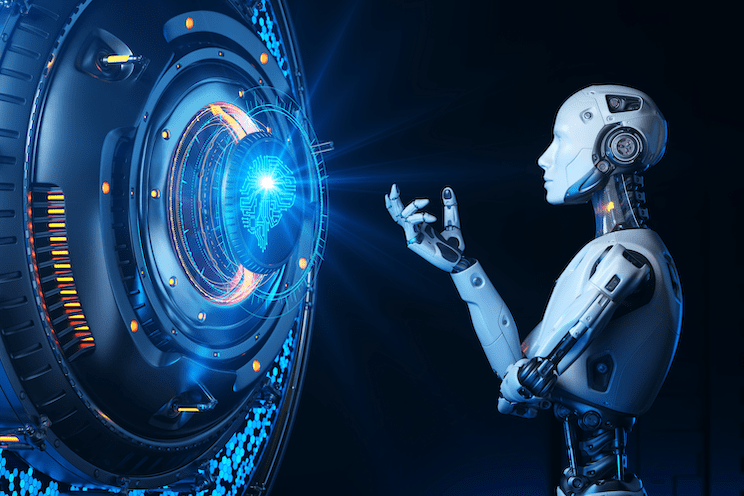
    Symbiotic Intelligence refers to the complementary relationship between humans and artificial intelligence (AI), where both entities leverage their unique strengths to drive innovation and solve complex problems. This relationship is characterised by mutual enhancement, with AI augmenting human capabilities while humans provide context, empathy, and ethical considerations that machines cannot replicate.

    Core Pillars of Symbiotic Intelligence

    1. Augmentation, Not Automation:

    Augmented Intelligence: Enhancing human capabilities through collaborative AI tools and insights.

    At the heart of Symbiotic Intelligence is the principle of augmentation, where AI systems are designed to enhance human capabilities rather than replace them. This means automating repetitive tasks to allow employees to focus on higher-level strategic thinking and creativity. For instance, Salesforce has integrated AI tools that free up sales representatives from administrative tasks, enabling them to concentrate on building client relationships and developing strategies. Organisations that adopt an augmentation mindset experience improved employee engagement and higher job satisfaction .

    2. Continuous Learning and Adaptability:

    Adaptive Learning Ecosystems: Fostering continuous learning and adaptability in a dynamic environment.

    In a rapidly evolving technological landscape, continuous learning is essential for both individuals and organisations. Symbiotic Intelligence encourages a culture of lifelong learning, where employees regularly update their skills and knowledge to remain competitive. Companies like IBM and Google exemplify this through their AI-driven learning platforms, which offer personalised development pathways tailored to individual learning styles and career goals. This adaptability not only helps employees stay relevant but also fosters a resilient organisational culture that can navigate change effectively .

    3. Trust and Transparency in AI Use:

    Ethical AI Governance: Ensuring responsible and transparent AI use in decision-making processes.

    Trust is a foundational element in the collaboration between humans and AI. Organisations must prioritise the ethical use of AI, ensuring that systems are transparent and explainable. The EU AI Act emphasises the importance of accountability and fairness in AI applications, addressing consumer concerns regarding the ethical implications of AI technologies. By fostering trust through transparent processes and responsible AI practices, organisations can enhance user acceptance and promote a positive perception of AI in the workplace .

    In conclusion, embracing Symbiotic Intelligence empowers organizations to create a future where humans and AI work together harmoniously. By focusing on the pillars of augmentation, continuous learning, and trust, organizations can unlock unprecedented levels of innovation and productivity. This mindset not only prepares them for the challenges of an AI-driven world but also cultivates a workplace culture that values collaboration, adaptability, and ethical responsibility.

    How to Begin Adopting SymMind 

    For companies looking to embrace the Symbiotic Intelligence Mindset, consider the following strategies:

    Emphasise Augmentation Over Automation:

    • Begin by assessing roles that could benefit from AI assistance rather than outright automation. Focus on how AI can complement human skills, enabling employees to perform their tasks more effectively.

    Build a Learning Culture:

    • Implement AI-driven learning platforms that personalise employee upskilling based on their roles and aspirations. Encouraging a culture of continuous learning ensures that employees remain relevant and adaptable in a changing technological landscape.

    Ensure Transparency:

    • Regularly communicate the use of AI, its processes, and its impacts on decision-making. Promoting ethical use of data builds trust and fosters a positive relationship between employees and AI systems.
    Ways to embed this Model

    AI Enhancement Labs:

    • Organise internal workshops where employees can brainstorm innovative ways that AI could enhance their daily tasks. This collaborative approach encourages creativity and involvement in AI implementation.

    Human + Machine Project Teams:

    • Form mixed teams where specific tasks are delegated to AI, while strategy and decision-making remain human-led. This structure not only optimises productivity but also enhances employee engagement and ownership over their work.

    The Future of Work with SymMind

    As AI continues to evolve, the need for a Symbiotic Intelligence Mindset will only grow stronger. Embracing augmentation, continuous learning, and trust will be critical for organizations striving to stay ahead in the future of work. The organizations and individuals who thrive in the AI era will be those who view AI as a collaborator, not a competitor.

    This model positions organizations as forward-thinking, fostering a culture where human ingenuity thrives alongside AI. It’s a unique framework that inspires new perspectives on change and collaboration.

    Are you ready to adopt SymMind? Start by assessing how AI can augment your work or organisation, commit to continuous learning, and build trust in the systems that will shape the future. By integrating the Symbiotic Intelligence Mindset into your organisational culture, you can unlock the full potential of AI while empowering your workforce to excel in a collaborative environment.

    References:

    1 Devlin, Moira (2024) Symbiotic Intelligence Mindset (SymMind) Model (2024)

    2 Accenture (2018). AI: Built to Scale. How Businesses Can Accelerate AI to Drive Growth. Accenture Strategy  accenture.com

    3  Willcocks, L. and Lacity, M. (2016) Service automation: Robots and the future of work. Steve Brookes Publishing

    4 McKinsey & Company (2018). Artificial Intelligence: The Next Digital Frontier? McKinsey Global Institute

    5 Li, D., Brynjolfsson, E., & Raymond, L. (2024). Generative AI at Work. MIT Sloan School of Management, National Bureau of Economic Research. Available at: MIT Sloan School of Management Website (MIT Sloan)

    6 and 7 World Economic Forum (2020) The Future of Jobs Report 2020 marketbusinessnews.com​

    8 IBM’s Learning System: Qin, L., & Kochan, T. A. (2020). The Learning System at IBM. MIT Sloan School of Management  mitsloan.mit.edu

    Google’s Learning Initiatives: Grow with Google. (n.d.). Online Courses with Certificates. Grow with Google

    9 Forbes (2023) Ethical AI: The Consumer Perspective  forbes.com

    10 McKinsey & Company (2023) Transparency and Trust: The Key to AI Adoption  mckinsey.com

    11 European Commission (2021) Proposal for a Regulation on a European Approach to Artificial Intelligence  commission.europa.eu

    12 Salesforce (2023) Salesforce Ethical AI Framework  salesforce.com

    Forbes (2022) Salesforce’s Ethical AI Framework: Guiding Principles for AI Development   forbes.com

    13 Salesforce (2022) Salesforce AI: The Future of Sales  salesforce.com

    Forbes (2023) How Salesforce Is Using AI To Help Sales Teams Work Smarter  forbes.com

    14 Siemens (2022) AI and Predictive Maintenance: The Future of Industrial Operations Siemens

    McKinsey & Company (2021) How AI is Reshaping Industrial Maintenance McKinsey & Company mckinsey.com

    15 IBM (2022) Watson Health IBM Watson Health  merative.com

    Forbes (2023) How AI Is Transforming Healthcare  forbes.com

    16. JPMorgan Chase (2023) Artificial Intelligence at JPMorgan  jpmorganchase.com

    Harvard Business Review (2022) The Benefits of Artificial Intelligence in Finance  hbr.org

    17 Siemens (2022) Digitalization in Manufacturing Siemens

    McKinsey & Company (2021) The Future of Manufacturing: How AI is Reshaping the Industry mckinsey.com

    18  Walmart (2022) Walmart and Artificial Intelligence  walmart.com

    Business Insider (2023) Walmart’s AI Strategy to Enhance Customer Experience  businessinsider.com

    19 UPS (2022) How UPS Uses Artificial Intelligence  ups.com

    Forbes (2023) The Impact of AI on Logistics and Transportation  forbes.com

    20 Coursera (2022) How AI Personalizes Learning  coursera.org

    EdTech Magazine (2023) AI in Education: The Future of Learning  edtechmagazine.com

    21 Zendesk (2022) How AI is Changing Customer Service  zendesk.co.uk

    Harvard Business Review (2023) The Role of AI in Customer Service  hbr.org

    22 Enel (2022) AI in Energy Management  enel.com

    McKinsey & Company (2023) AI in Energy: Optimising Performance McKinsey  mckinsey.com

    This article protected by EU & International Copyright Laws. 

    © 2024 Lifexpression Limited All Rights Reserved. © 2024 Moira Devlin © 2024 Shutterstock.com. © 2024 Envato Pty Limited

  • Sensationalism Unleashed: Unravelling the Rise of Yellow Journalism

    Sensationalism Unleashed: Unravelling the Rise of Yellow Journalism

    Exploring the Manipulative Power of Emotional Appeals and the Impact on Modern Media

    Press Wars: The Fiery Genesis of Yellow Journalism

    In the late 19th century, a fierce rivalry between two prominent New York City newspapers, the New York World (owned by Pulitzer 1) and the Journal (owned by Hearst 2), gave birth to a sensational journalistic style known as Yellow Journalism (3). 

    What is purpose of Yellow Journalism? Its aim is to appeal to the reader’s emotions directly. The Yellow Kid was a successful cartoon strip printed in Pulitzer’s New York World. But Hearst lured the cartoonist to work for him. Pulitzer hired a different cartoonist to keep the Yellow Kid alive in his newspaper. So, there were two competing Yellow Kid strips in both papers. Both versions ended in 1898.(4)

    This rivalry, coupled with the success of the cartoon strip “The Yellow Kid” led to the label – Yellow Journalism. This shameless sensationalism, fuelled by emotional appeals and relentless crusades for or against various causes, resulted in significant increases in both papers’ circulations and had a lasting impact on journalism across America. 

    During the era of Yellow Journalism, not alone in doing this, both the New York City  and the New York World newspapers ran sensationalised stories to attract readers and increase circulation. Here are a couple of examples of the types of stories that were published:

    Cuban Revolution and the USS Maine (1898):

    As tensions escalated between Spain and the United States during the Cuban Revolution, the newspapers covered the events extensively. The sinking of the USS Maine in Havana Harbour on February 15, 1898, was a pivotal moment. Both newspapers eagerly covered the incident, using dramatic headlines and emotionally charged language to suggest that the Spanish government was responsible for the explosion that sank the ship, resulting in the loss of 260 American lives. The coverage fuelled anti-Spanish sentiment and played a role in pushing public opinion towards supporting the Spanish-American War. (5)

    The Murder of Helen Jewett (1836):

    In 1836, the newspapers extensively covered the sensational murder of a young prostitute named Helen Jewett, who was brutally killed in her New York City brothel. One of her regular clients, Richard Robinson, was tried and sensationally acquitted of her murder. Jewett’s murder and Robinson’s subsequent trial was one of the first sex scandals to receive detailed press reporting. The coverage led to a split in public opinion. Some felt Jewett had brought it upon herself, while others accused Robinson of using his influence to evade justice.

    The newspapers exploited the details of the crime, delving into salacious and graphic descriptions, making the story a sensation. The coverage sensationalised the case, turning it into a major scandal that captivated readers and sold many copies of the newspapers. (6)

    These examples illustrate how both newspapers used dramatic storytelling, emotional appeals, and exaggeration to draw readers’ attention and create public interest in their reporting. While some of the stories contained elements of truth, the newspapers’ primary focus was on maximising readership and circulation through sensationalism rather than delivering objective and balanced news coverage. 

    Tugging Heartstrings: The Power of Emotional Appeals in Yellow Journalism


    One of the key factors that made Yellow Journalism so successful was its adept use of emotional appeals to sway readers’ beliefs and behaviour. By provoking readers’ feelings and connecting claims with potential emotional outcomes, Yellow Journalism manipulated public opinion. While emotional appeals can sometimes be used genuinely and effectively in persuasion, Yellow Journalism often resorted to fallacious tactics. It replaced rational thought, used stereotypes to create divisions, and evoked quick reactions to complex issues, all while manipulating emotions like fear, hate, anger, and jealousy instead of relying on facts and valid arguments.

    An appeal to emotion attempts to provoke your feelings to make you believe something or change your behaviour. It follows:

    • Claim→ Emotional Appeal→ Call to Action

    This claim is true. Think of how awful you will feel if it is not true. Or: This claim is true. Think about how happy you will be if it is true!

    These statements have you considering your future emotions to determine your belief about the statement. An emotional appeal can be a friendly approach when the speaker is attempting to persuade you by using emotions as the basis of their argument, but it can mislead or disguise a weak argument.

    When used fallaciously, emotional appeals:

    • Act as a replacement for rational thought of any kind
    • Use stereotypes to pit groups against each other (often happens in politics)
    • Evoke a swift reaction to a complex issue
    • Use emotions such as fear, hate, anger, jealousy to manipulate people instead of convincing them with facts and validity

    The appeal to emotion is a logical fallacy which manipulates emotions to strengthen and support the conclusion of an erroneous argument.

    Appeals to emotion can be highly effective, and are used in many contexts:

    Provide an excessive number of arguments with no regard for the accuracy or strength of those arguments, or using an unnecessarily large number of words to express an idea

    Presenting relevant quotes or anecdotes

    Using stories or metaphors

    Making misleading comparisons

    Using charged and potentially misleading language

    Delivering statements passionately

    Overwhelm people and make it harder for them to analyse arguments logically

    Clicks, Shares, Controversy: How Social Media Propelled Yellow Journalism

    With the advent of social media, Yellow Journalism found an even more fertile ground for its biased sensationalism, shaping public opinion in unprecedented ways.Social media platforms provided an instantaneous and far-reaching channel for disseminating this style of journalism and eliciting strong public reactions. The race for likes, shares, and followers became a primary goal, leading to the spread of unverified or misleading information without proper fact-checking or source review. This has given rise to the spread of fake news and distorted narratives, often driven by the desire to be the first to break a story with a personalised twist.

    Today, stories can quickly go viral because of our reaction through the use of technology at our fingertips. Media outlets are being redefined because of this. Social media, such as Twitter, can inform News Bulletins and vice versa. Rise of bot farms and click bots feeds into news sources, individual influencers and how we get persuaded or affected by information.

    Competition for space in our minds is fierce and principally we have the tendency to process information in a faulty and usually biased way, which prefers intuitive emotional reasoning over fact-based analytical reasoning.

    Even we consider whether a certain opinion or behaviour will make us feel good or bad when it is irrelevant to the argument being made. This can make it harder for us to identify the true issue.

    Today, Yellow Journalism can be found not only in traditional media but also in various online platforms, including social media influencers who employ clickbait titles and thumbnails to capture audiences’ attention, often at the expense of accuracy. Technological advancements have made it easier for sensational stories to go viral, shaping media outlets and influencing public opinions in ways previously unimaginable.

    When Facts Take a Backseat: Unraveling the Emotional Tactics 

    The power of emotional appeals in persuasion cannot be denied, as humans are inherently emotional beings. This is nothing new. Aristotle, the ancient Greek philosopher, was a pioneer in the study of rhetoric and persuasion. In his influential work “Rhetoric,” he outlined three essential elements of persuasive communication.

    • logos (appeal to logic) ✔︎
    • ethos (appeal to credibility and ethics) ✔︎
    • pathos (appeal to emotion) ✔︎

    Pathos, in particular, played a crucial role in Aristotle’s persuasion technique.

    According to Aristotle, appealing to the emotions of the audience was an effective means of persuading them to accept a particular argument or viewpoint. He believed that emotions were an integral part of human decision-making and that a well-crafted emotional appeal could resonate deeply with the audience, evoking empathy, sympathy, or even passion. Aristotle identified several key emotions that could be harnessed for persuasion, including fear, anger, pity, and joy.

    To effectively employ pathos, Aristotle emphasised the importance of understanding the emotions and values of the target audience. By tailoring the message to align with the audience’s emotions and interests, the speaker could establish a powerful connection and increase the likelihood of winning them over. However, Aristotle also cautioned against excessive emotional manipulation, as it could lead to the audience feeling manipulated or deceived, undermining the credibility of the speaker. So it is crucial to recognise and address the logical weaknesses and manipulative tactics employed in Yellow Journalism. To avoid falling into the trap of emotional appeals, we must engage in critical thinking and rely on a combination of facts and logical reasoning to present compelling arguments and to disseminate real from fake news, opinion from fact.

    Aristotle’s recognition of the power of emotions in persuasion has had a lasting impact on rhetoric and communication strategies. Even today, public speakers, advertisers, and politicians use emotional appeals to sway opinions and shape public sentiment. The balance between logic, credibility, and emotion remains a fundamental aspect of persuasive communication, and Aristotle’s insights continue to be studied and applied in various fields to this day. (7)

    Truth and Trust: Reclaiming Responsible Journalism in the Digital Era

    The power of media manipulation, especially through techniques like Yellow Journalism, can be both fascinating and concerning. Sensationalism and emotional appeals have the potential to deeply influence public opinion, shape narratives, and even impact historical events. The ability to tap into people’s emotions and provoke strong reactions is a double-edged sword—it can be used for noble causes, such as inspiring positive change and rallying support for important issues, but it can also be exploited for nefarious purposes, spreading misinformation and inciting fear and division.

    As consumers of information, it is essential to be vigilant and critical about the sources and content we encounter. Being aware of the techniques used in media and understanding how emotions can be manipulated allows us to make more informed judgments and guard against falling prey to misinformation or biased narratives. Engaging in fact-checking, seeking diverse perspectives, and cultivating critical thinking skills are vital steps in navigating the media landscape responsibly.

    Moreover, media literacy is becoming increasingly important in the digital age, where information spreads rapidly and can reach a global audience within moments. By being mindful of our emotional responses to news and information, we can make more reasoned and objective decisions, fostering a healthier and more informed society. As citizens of the information age, it is crucial to stay aware, discerning, and open to different viewpoints, ensuring that we are active participants in shaping our understanding of the world around us.

    The rise of Yellow Journalism during the late 19th century marked a significant turning point in the world of media. Its shameless sensationalism, use of emotional appeals, and fierce competition between newspapers revolutionised journalism, leaving a lasting impact that still resonates today. With the advent of social media and advanced technology, the prevalence of Yellow Journalism has only intensified, presenting challenges in discerning truth from manipulation. Let’s move forward with studying Aristotle’s ‘Rhetoric’, cultivating critical thinking skills, developing research skills and fact-checking techniques. Being ever vigilant in evaluating sources, and acknowledging the role of emotions in persuasion, we can better navigate the information landscape and make informed decisions based on both facts and rational judgment.

    References:

    1 – Britannica, The Editors of Encyclopaedia. “Joseph Pulitzer”. Encyclopedia Britannica, (2023) https://www.britannica.com/biography/Joseph-Pulitzer.

    Morris, James McGrath (2010) Pulitzer: A Life in Politics, Print and Power,  a scholarly biography. Harper Perennial.

    2 – Britannica, The Editors of Encyclopaedia. William Randolph Hearst | American newspaper publisher. Encyclopedia Britannica, (2023) https://www.britannica.com/biography/William-Randolph-Hearst

    3- Campbell, Joseph W. (2003). Yellow Journalism: Puncturing the Myths, Defining the Legacies. Praeger.

    4 – Olson, Richard D. (2016) “R. F. Outcault, The Father of the American Sunday Comics, and the Truth About the Creation of the Yellow Kid”. Neponset.com.

    Wood, Mary (2004). The Yellow Kid on paper and stage, Contemporary illustrations.

    5 – Whyte, Kenneth (2009). The Uncrowned King: The Sensational Rise of William Randolph Hearst. Berkeley: Counterpoint.

    Young, Greg , (2020) The War on Newspaper Row: Pulitzer, Hearst and the Sinking of the USS Maine.Bowery Boy.  https://www.boweryboyshistory.com/2020/08/the-war-on-newspaper-row-pulitzer-hearst-and-the-sinking-of-the-uss-maine.html

    6 – Cohen, Patricia Cline (1998). The Murder of Helen Jewett: The Life and Death of a Prostitute in Nineteenth-century New York. New York: Alfred A. Knopf. 

    7 – Kenny, Anthony J.P. and Amadio, Anselm H.. “Aristotle”. Encyclopedia Britannica, (2021) https://www.britannica.com/biography/Aristotle

    The Rhetoric  translated by Kennedy, George (1991) Aristotle On Rhetoric. A Theory  of Civic Discourse. New York/Oxford: Oxford University Press – Rhetoric appeals and Method

    This article protected by EU & International Copyright Laws. 

    © 2023 Lifexpression Limited All Rights Reserved. © 2023 Moira Devlin © 2023 Shutterstock.com. © 2023 Envato Pty Limited

  • Is there a A Leader and A Follower Mindset?

    Is there a A Leader and A Follower Mindset?

    Leadership skills, traits and behaviour are topics of many books. We submerge ourselves in a sea of books and articles about leadership. Many sayings exist to describe leadership. “Always lead, never follow. It’s easy to follow, but great people don’t follow, they lead. Become the leader others will follow….”

    Leaders can embrace an autocratic, democratic, coaching, or even servant-oriented approach. There is abundant speculation about the various approaches to leadership, including their qualities , abilities, and styles. This narrative encourages us to take charge, take on our own responsibilities, and make a remarkable impact in the world. But this overwhelming belief that success comes from being the leader is setting us up for disappointment.. Most of us will never run countries, organisations or other bodies. Leadership in this context is for the few. 

    Some of us may feel an internal drive to become a leader, while others may recoil at the thought of it, not wanting the added pressure. A true leader can only exist when there are people willing to follow. The followers are often overlooked. But in life, we can be both the leader and the follower. In our personal life, we could be the one leading the way, say as head of the family or coaching a local football team. But at work, we could be content to follow the lead of someone else. Depending on the situation, we may have roles of leading and following in both our work-life and our personal-life. We all possess a combination of leading and following characteristics, making us all unique. Let’s consider how we can be leaders and followers.

    WHAT IS THE DIFFERENCE BETWEEN LEADERS AND FOLLOWERS?

    A leader is someone who can make their followers believe in their vision and act upon it. An outstanding leader exudes ethicality, charisma, and inspires others with their personable nature. They motivate their followers, using words of encouragement and a drive that resonates with potential followers to reach their goals. With a powerful presence, they command attention, offering a sense of freedom to take risks and instigate creativity to find the best ways to complete a task. The follower has less responsibility, takes orders, and looks up to the leader, and they understand the limitations of their position. They take pleasure in seeing the details come together, following directions to make the delivery of goals a reality. 

    This stark separation can make us think we can only be one or the other. Surely many of the qualities can be found in followers and leaders alike? And isn’t everyone a follower to someone? We can choose only to be a follower or we can choose to be both switching on a case by case basis.

    HOW DID LEADERSHIP AND FOLLOWERS COME ABOUT?

    Humans exist in groups. We are social creatures, gathering together in large groups for safety and companionship. Leaders and followers emerge to give societal structure and help us flourish and develop this structure. One person can be the catalyst to point the way forward to encourage others to work together to keep society functioning.

    But successful leadership is based on the relationship between leaders and followers. Leaders and followers need to work together to bring about change and deliver against the said goal. (1). Cooperation and competition underlie the relationships between groups in societies. We can manage it through social specialisation and interdependence, but sometimes it can become hostile and even extreme. This depends on the situation and feelings regarding another group.

    Social Identity Theory (2)  is a person’s notion of themselves stemming from group affiliations. It proposed that groups, e.g. social class, family, football team, nationality, we belong to, are a source of our pride and self-worth. Groups provide us with a feeling of being part of the social world. The central premise is that members of an in-group will look for negative qualities of an out-group, thus improving their self-esteem. 

    Leaders and followers in any society attach their social identity and self image to the group. Both have invested their sense of self in what it means to be a member. Belonging to this in-group may cause beneficial outcomes however, it may also generate biased opinions between groups. 

    Unity of the group is paramount and its strength is via cooperation between the leader and followers.A nuanced perspective supports this as it looked at leadership as a medium for social identity-where leaders and followers are collaborators. The two sides of this partnership, a shared sense of identity. This causes leaders to make particular forms of identity and their own leadership workable. (3)

    WHAT MOTIVES LEADERS AND FOLLOWERS?

    Motivation process is something that stimulates us to keep doing the task we have already started. The hierarchy of needs model (4) is based on human needs and fulfilment. The urge to satisfy needs is the most important factor in motivation. Most of us have come across this model and it starts with physiological needs moving to safety and security, then social needs, and finally self-actualisation needs. From a work perspective, this can mean:

    *Enough salary to pay the bills * Enjoy job security *Work colleagues support in the workplace *Receive recognition for job well done *Get promoted with more responsibilities

    It implies that the more advanced needs cannot emerge until we fulfil the simpler ones. We are driven by unsatisfied needs to move forward. This model was further categorised into ERG theory (Existence, Relatedness and Growth).

    • Existence – ensuring humans have their basic material needs met.
    • Relatedness – sustaining significant interpersonal bonds.
    • Growth – desire for personal development.(5)

    Although there can be different expectations and aspirations, both leaders and followers go through the same motivational process. If we interchange between leader and follower in different situations we can adapt our needs.

    Alongside this, we are driven by intrinsic motivation and/or extrinsic motivation. Internal motivation involves undertaking a task for its own pleasure rather than for any obvious external reward. Whereas extrinsic motivation describes our behaviour as being driven by external incentives or consequences, e.g., monetary loss, demotion, social respect, shame. Intrinsic motivation comes from within us and extrinsic motivation is external. (6)

    Mixing extrinsic motivation with intrinsic motivation happens frequently. Such as when working on a project, we push to reach our deadline while enjoying the work and learning something new. Or we may work hard out of fear of failure even if we are enjoying the subject while studying for an exam.

    Naturally, leaders have the power to act on the best ways to trigger internal and external motivation to get the best from their followers. But the motivational process is the same for both. A leader, say a CEO, can be motivated by their leader (and becomes a follower) eg board of directors, chair, investors, stakeholders, through incentives, praise, reputation and rewards. 

    Sometimes, followers look at how they can understand the motivation of their leader to try to get that leader to act in a particular way. So we shouldn’t relegate followers to the role of passive recipients. This is further emphasised by research suggesting – within a leader-follower relationship, “followership escapes the box of simple subordination and obedience of organisational tasks and opens up opportunities for innovative followership that generate and enhance growth within their leader.” (7)

    The various leaders and followers roles can have interdependent relationships that are intertwined by circumstance. Where we are leaders and followers depends on whether we look up or down, left or right inside or outside our organisation or in our personal life. 

    WHAT DOES FOOTBALL TELL US?

    The biggest sport in the world, we globally adore football, with its cheers and chants echoing from every continent. Many football clubs are recognisable on a global scale and set up like other business entities. 

    Despite their C suite executives, it is the Football manager/coach and the players we focus on. Rarely does an organisation have any employee lower than the CEO having such an influence over the running of it. Even during transfer periods we watch the actions of say Director of Football and the Head Scout to understand if the football manager is getting what is needed for a strong squad. 

    The fans’ investment is their support and money. While their return comes as the emotional gratification of some level of success for their club. Sometimes fans have ownership or part ownership in a club too. Fans can belong to supporter associations including football ultras. And many players become role models impacting aspects of society well beyond football.

    Football is a great example of the layering of leaders and followers and where you can have single or hybrid roles depending on which direction you look. We should recognise that we can be hybrids of leaders and followers or instead a follower only and this is okay. Remembering that we are always a follower to someone even if a leader. Let’s be more like football!

    References:

    1. Hackman, M. Z., & Johnson, C. E. (2009). Leadership: A communication perspective (5th ed.). Prospect Heights, IL: Waveland.

    2. Tajfel, H.; Turner, J. C. (1979). “An integrative theory of intergroup conflict”. In W. G. Austin; S. Worchel (eds.). The social psychology of intergroup relations. Monterey, CA: Brooks/Cole. pp. 33–47.

    Tajfel, H.; Turner, J. C. (1986). “The social identity theory of intergroup behaviour”. In S. Worchel; W. G. Austin (eds.). Psychology of Intergroup Relations. Chicago, IL: Nelson-Hall. pp. 7–24.

    3. Reicher, Stephen S. Haslam, Alexander and Hopkins, Nick (2005) Social identity and the dynamics of leadership: Leaders and followers as collaborative agents in the transformation of social reality, The Leadership Quarterly,Volume 16, Issue 4,Pages 547-568.

    4. Maslow, Abraham H. (1943). “A theory of human motivation”. Psychological Review. 50 (4): 370–396.

    5. Alderfer, Clayton P. (1969). “An empirical test of a new theory of human needs”. Organizational Behavior and Human Performance. 4 (2): 142–75

    6. Deci, Edward, L. & Ryan, Richard, M. (1985).Intrinsic motivation and self-determination in human behavior. New York: Plenum Press.

    Deci, Edward, L. & Ryan, Richard, M. (2000). The ‘what’ and ‘why’ of goal pursuits: Human needs and the self-determination of behavior.Psychological Inquiry, 11, 227-268

    Deci, Edward, L. & Ryan, Richard, M. (2000). Self-determination theory and the facilitation of intrinsic motivation, social development, and well-being. American Psychologist, 55, 68-78.

    7. Gilbert & Matviuk. (December 01, 2008). The symbiotic nature of the leader-follower relationship and its impact on organizational effectiveness. Academic Leadership, 6, 4.)

    This article protected by EU & International Copyright Laws. 

    © 2023 Lifexpression Limited All Rights Reserved. © 2023 Moira Devlin © 2023 Shutterstock.com. © 2023 Envato Pty Limited

  • Four Drivers of Procrastination

    Four Drivers of Procrastination

    Why we really put things off

    Procrastination is often painted as the enemy of productivity, blamed for missed deadlines, unnecessary stress, and endless frustration. But what if procrastination is more than just a bad habit? Instead of focusing on the surface—poor time management, distraction, or laziness—let’s dive deeper. Procrastination is often driven by complex psychological forces that we rarely talk about. In fact, four key drivers could be influencing why you keep delaying that task. Understanding these might just change how you approach your work—and yourself. Let’s explore the real reasons behind why we put things off.

    Some Procrastination Myths

    It is the act of stalling, halting, or postponing finishing a task. But, it is not the same as being idle or inefficient. When we are lazy, we are disinclined to finish a task. We prefer to remain inactive or do something else. Whereas procrastination is about delaying task completion.

    So, unlike someone who is lethargic, a procrastinator aspires and intends to complete the task in question.

    Laziness is more commonly used to characterise conduct that does not meet someone’s expectations. Judging conduct as lazy is a matter of subjective opinion and does not have a specific cause. It is not a formal term. Even one person’s idea of lazy maybe another’s idea of a busy day!

    So is it a problem of insufficient time management rather than laziness?

    Making the most of our time can maximise productivity and make sure we arrange our priorities properly. It is about structuring, designing and setting tasks to meet deadlines. This may include divvying up tasks to others and aiding them in executing said tasks.

    It involves defining targets, arranging our workspace and formulating how to break our time into constructive portions, which reduce stress and amplify our results. 

    Excellent planning is found in any time management strategy. It’s about managing time to deliver against demands. Time management is part of our organisational skills. The reasons for poor output as a result of procrastinating and frittering away time by delaying a task is not improved by new or extra time management processes or tools. 

    What happens when we procrastinate ?

    Reflections of finishing a task can provoke uneasiness and we can soothe the signs of uneasiness by putting off the task. It is a logical and effective emotional coping mechanism for dealing with unpleasant feelings.

    This allows us to repair that distress to feel better.

    The nature of procrastination is essentially “a self-defeating behaviour pattern marked by short-term benefits and long-term costs” (1)

    Although this strong feeling of anxiety recedes, if we say I’ll do it later. It is a short-term coping mechanism. But it does not resolve any issues around completing the task.

    What sits behind I’ll do it later?
    Motivation Breakdown

    Some research (2) tells us we obtain inspiration from two sources – internal and external motivation.

    Extrinsic motivation relates to external driving forces, which can be positive or negative like acquiring awards, getting money or gifts, vacation, or a fear of being seen as a failure or receiving penalty for not finishing a task.

    Intrinsic motivation is based on internal stimulus like autonomy, becoming a specialist in a subject, fondness of the topic, taking pride in achievements.

    Another theory focuses on needs. (3) McClelland’s Need Theory references three needs: achievement, power, and affiliation. They are:

    • Need for Achievement: Drive to reach and realise success relative to a set of standards. Compete to win, ambitious high-need achiever, assume personal responsibility for executing a task, for uncovering a solution, accomplishing complicated objectives, taking calculated risks.
    • Need for Power: Desire to persuade others and influence people, enjoy having sway over people and events. This results in ultimate satisfaction. It includes wanting to shape and exercise control over others. Being the leader is key.
    • Need for affiliation: Yearning to create and keep up amicable and cozy relations. With a powerful drive for recognition and endorsement from others, adjust to the wants of those individuals whose emotions they respect and companionship and fellowship they cherish.
    • Being motivated is our path to taking action for success, which means we fulfil what we promised ourselves. And yet many times our motivation can breakdown. This can lead to delay and putting off a task. Our motivation is influenced by our self-concept and our beliefs.Do it Don’t Quit isn’t always easy despite incentives and resources.
    Shaky Self-Concept and Negative Beliefs

    Roger’s approach (4) suggests forming a healthy sense of self is an ongoing mission shaped by our life experiences. Those with a sound sense of self have more confidence and manage more productively with life’s obstacles. Parenting influences self-concept development during childhood. Caregivers who offer their children unconditional affection and respect are more likely to nurture a healthy self-concept. Children who feel they have to ‘deserve’ their parents’ love may end up with low self-esteem and feelings of unworthiness. 

    During childhood is where our core beliefs get established. These fundamental beliefs are our most profoundly held speculations about ourselves, the world, and others.A belief is something we consider being true based on fact or an opinion or speculation. It is a belief and thought about something, which can be distorted and wrong.

    Early in life, we form central convictions moulded by our upbringing and life lessons. Because they are so deep-seated and embedded, they are very difficult to change. Their original goal is to help us make sense of our formative events, but they can become counterproductive or even damaging later in life. (5) .

    But as we set them out from a young age, we look for evidence that strengthens them, and ignore anything that might challenge them. They influence our sense of self by boosting or decreasing our self-esteem.

    • Self-image – how we see ourselves in the moment
    • Ideal self – the person we want to be
    • Self-esteem – how much we like, accept and value ourselves (4)
    • Helplessness – personal incompetence, vulnerability, and inferiority.
    • Unlovability – fear that we are not-likeable and incapable of intimacy,
    • Worthlessness – we are insignificant and a burden to others (6) 

    We have a concept of our ideal self. The problem is our image of who we think we should be does not always match up with our perceptions of who we are today. When our self-perception does not line up with our ideal self, we are in a state of disharmony.(4)

    If our self-image and ideal self are not in harmony, then this can lead to anxiousness. When we are uneasy, we can determine to counterbalance and abate that feeling by distorting our experience and ignoring a threat. (4)

    It is a lack of self-worth which is produced from the discrepancy between our self image and ideal self. Our core beliefs affect our self-esteem. So we can feel incompetent, vulnerable or unlovable or insignificant.It erodes our self-esteem. If we have low self-esteem and negative core values it affects our ability to complete tasks.

    Sometimes our thoughts materialise so quickly we overlook them. These thoughts shape how we feel. If these are constructive notions, then it is not so much of an issue. But when detrimental can affect our emotions and behaviours dramatically. This can occur without us noticing it.

    A model outlined three interrelated levels of cognition explain this further:

    • Core beliefs
    • Dysfunctional assumptions
    • Negative automatic thoughts

    We can think of our counterproductive automatic thoughts as results of our unworkable assumptions and core beliefs. (7) 

    If we comprehend how our motivations, self-concept, primary beliefs form our view of ourselves. Then we can develop solutions to alleviate procrastination getting in the way of completing tasks.

    Reactionary Nervous System

    Lastly, let’s consider: what is happening in our bodies when we are procrastinating? Our bodies can determine the notion of not finishing the task as a threat.

    The Limbic System is unique and a dominant portion of our brains. It’s processes are mostly automatic.This area of the brain functions like a command centre communicating with the rest of the body through our nervous system. It tells us when we feel like we have to eg, flee from an unpleasant situation. 

    We have the choice of: Flight, Flight, Freeze, or Fawn to respond to threats. (8). These are trauma responses. Frequent, intense fear responses when there is not an actual threat can be a sign of anxiety. Irrespective of which one we select, it means not completing the task.

    Procrastination is not solely a mindset process. While our minds affect our emotions, choices and behaviours, it is a physiological process too. It is what happens when our brains perceives a real or imagined threat, including stress or trauma.

    Let us recognise motivation breakdown, shaky self-concept/negative beliefs and physical response behind any procrastinating behaviour. It’s the first step to diminishing procrastination. Let’s check out what deferral of a task means this week. Together with the factors involved before critiquing ourselves and others.

    References:

    1. Tice, Dianne .M. and Baumeister, Roy  F (1997) Longitudinal study of procrastination, performance, stress, and health: The costs and benefits of dawdling Psychological Science, 8 (6) (1997), pp. 454-458

    2. Deci, Edward, L. & Ryan, Richard, M. (1985).Intrinsic motivation and self-determination in human behavior. New York: Plenum Press.

    Deci, Edward, L. & Ryan, Richard, M. (2000). The ‘what’ and ‘why’ of goal pursuits: Human needs and the self-determination of behavior.Psychological Inquiry, 11, 227-268

    Deci, Edward, L. & Ryan, Richard, M. (2000). Self-determination theory and the facilitation of intrinsic motivation, social development, and well-being. American Psychologist, 55, 68-78.

    3. McClelland, David. (1961) The Achieving Society. New York: Van Nostrand

    McClelland, David and Burnham, David (1977),  Power is the Great Motivator, Harvard Business Review, 

    McClelland, David. (1988). Human Motivation, Cambridge University Press.

    4. Rogers, Carl. (1951) Client-Centered Therapy: Its Current Practice, Implications, and Theory. Boston: Houghton Mifflin.

    Rogers, Carl. (1961) On Becoming a Person: A Therapist’s View of Psychotherapy. Boston: Houghton Mifflin.

    Rogers, Carl. (1980) A Way of Being. Boston: Houghton Mifflin.

    5. Osmo, F., Duran, V., Wenzel, A., de Oliveira, I. R., Nepomuceno, S., Madeira, M., & Menezes, I. (2018). The negative core beliefs inventory: Development and psychometric properties. Journal of Cognitive Psychotherapy, 32(1), 67–84.

    6. Beck, Judith S. (2005). Cognitive therapy for challenging problems: What to do when the basics don’t work. Guilford Press.

    Beck, Judith S. (2011). Cognitive behavior therapy: Basics and beyond (2nd ed.). Guilford Press.

    7. Beck, Aaron. T. (1979). Cognitive therapy and the emotional disorders. Meridian.

    8. Cannon, Walter B (1915). Bodily changes in pain, hunger, fear, and rage. New York: Appleton-Century-Crofts.

    Cannon, Walter B (1932). Wisdom of the Body. United States: W.W. Norton & Company.

    Walker, Peter (2013). Complex PTSD: From Surviving to Thriving : a Guide and Map for Recovering from Childhood Trauma.

    This article protected by EU & International Copyright Laws. 

    © 2023 Lifexpression Limited All Rights Reserved. © 2023 Moira Devlin © 2023 Shutterstock.com. © 2023 Envato Pty Limited

  • Mind The Gap

    Mind The Gap

    Effective Tactics for Closing the Skills Divide

    Like our human competitors for work, jobs and promotion, we may have the requisite technical proficiencies and work experience.  So how do employers or investors tell us apart? They are watching out for any clues to understand our personalities and soft business skills accomplishments. What is the unique beneficial edge we tease with? Employers and investors want to know what motivates us to succeed. An excellent hobby or two makes us stand out when looking for a job or investment.

    Selling Our Benefits

    Our hobbies give many hints and tips about our identities and soft skills expertise. We can use them to show-off our talents without coming across as arrogant. They provide us with the freedom to demonstrate our passion. They are those shining examples of where we overcame hardship. Or solved a tricky problem or tackled a difficult situation and emerged triumphant!

    Importantly offering a platform to build a genuine story of who we are, our achievements and how we can help an employer or an investor.

    Full of Life Skills

    Sometimes our pastimes get sidelined or put in the after thought box. However, they play a big role in our personal development, self-fulfilment, and mental health. They provide us with an excuse to experiment and understand better our abilities and how to turn these into new or improved skills.

    This makes them a great place to establish our technical and soft abilities in a safe and comfortable space. Leading to a hybrid skill-set mix, which we can use to enhance our career prospects. As well as refreshing technical skills, we should pay special attention to the soft business skills vital for our career success. They fall broadly into four buckets: communication, relationships, organisational, and thinking skills. Everyone has different needs and gaps to explore. By appreciating any gaps in our skills, we can set clear goals on new or up skill opportunities we want to gain to stay relevant.

    A Place for Curiosity

    Our pastimes encourage us to delve into what we like and dislike. They provide a sense of purpose and a way to express personality. We get the chance to thrive on our strengths on our own terms. Staying curious drives our desire to excel in our chosen hobbies.

    “The important thing is not to stop questioning. Curiosity has its own reason for existing.” — Albert Einstein (1)

    Research suggests a link between the mechanisms supporting extrinsic reward motivation and intrinsic curiosity. They highlight the importance of stimulating curiosity to create more effective learning experiences. We are better at learning information if we are curious about it. Curiosity prepares the brain for learning and makes subsequent learning more rewarding. (2)

    Without the culture of curiosity, learning is inadequate. If we are not interested, we may learn nothing. It is curiosity inspiring us to reach amazing feats. It fuels brilliant breakthroughs and innovations. From inventing the wheel to the printing press to smart phones and tablets, curiosity is driving every idea and invention.

    It is the magic pushing us to learn more. It makes our pastimes special to us. And it casts the spell on our motivation to study and become expert. To want to find everything we can about something. As children, we are curious. How many times did we ask ‘why’ each day? Hundreds or thousands!

    As a catalyst for our learning achievement, it primes the brain to learn. We have all experienced listening to a dull speaker. Then cannot recall what they said. Or reading a boring article, where we forget the points it made as soon as we finish it. We sign and remark, Glad that is over! But what is going on in our brains?

    We encounter the answer in 2 studies (2 & 3). They tell us curiosity boosts activity and interaction between three parts of the brain: the nucleus accumbens (NAcc) and substantia nigra/ventral tegmental area (SN/VTA). These are parts of the brain’s reward circuit, which combine with the hippocampus, handle the formation of fresh memories. This added memory boost is useful whenever we are trying to learn something new and complicated. We are unlikely to find every single element of a subject fascinating. But if we cultivate curiosity about some facts, we find that the rest of the material is understood and remembered more easily.

    So if we take time to explore our curiosity triggers this encourages us to learn new things about our hobbies and pastimes. We can transfer this knowledge to how we learn in the workplace.

    Make It Interesting

    Leisure activities divulge our passions, enthusiasm for learning new skills and how we enjoy ourselves. We should get inquisitive about our hobbies. Explore how they contribute to our skills. How can we use them as a stepping stone to improve our technical and soft skills that makes us feel relaxed and satisfied? 

    Each personal pursuit needs to be broken down and analysed. This means we discover which skills are present and how they apply to our career. We decide if we need to enhance or focus on them for further improvement. There are many reasons to use these personal pursuits to hone our professional skill set mix. Especially for our soft skills, where we can identify soft skills to practise and improve on. Also, it is a chance to develop extra activities and grow our pastimes further.

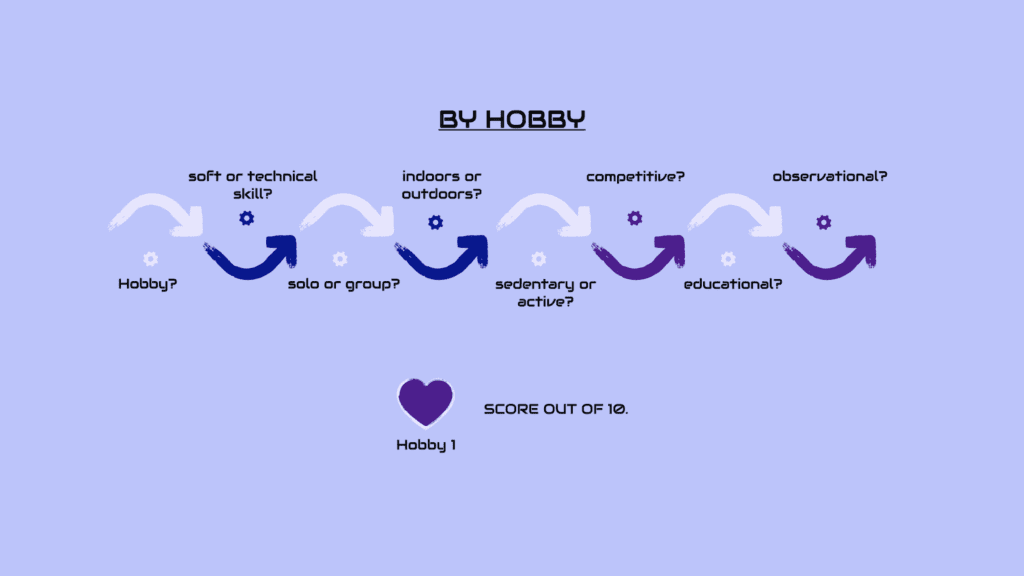
    Start by listing all of your hobbies and pastimes. Review these by asking key questions and scoring each one to determine just how much you love that hobby! (As set out below)

    Then consider, how do skills used in your leisure activities connect to your career? Do you use these skills already?  Establish any common skill themes around your pastimes. This feeds into your learning and training opportunities. For example, compare these common skills you used to the expected soft skills in your career at large. And to your present job or the job you are aiming to get. What are the gaps? How do you fill these? Make some notes on any key insights and next steps.

    Learn Everyday

    In the modern 21st century society, a successful person is someone who embraces studying as a lifelong process. We do not restrict learning to school, further education or that first job. It becomes part of daily living and is as natural as eating and sleeping.

    But how is it defined? It is self-motivated education focused on personal development. It can be informal or formal. However, its key driver is that it is voluntary to achieve personal satisfaction. So it requires us to be inquisitive and committed. Why is lifelong learning important today? The 4th Industrial and Agricultural revolutions are changing every workplace and seeping into our day-to-day life experiences. If we sign up for a lifelong learning, we can protect our careers. With confidence, we deal with the state of flux and disruption to the workplace and personal lifestyle.

    Are you ready to take on the challenge of a lifelong learning? It can ensure your career stability and fulfilment. Lifelong Learning Thinking solutions (4) is a 4 step  process, which you can use to walk through your journey. The four steps are discovery, charter, programme, and attainment. We start with clarifying any gaps in our abilities, skills, and experiences. Whilst exploring the best learning moments, styles and environments. You can integrate your leisure activities into this process. And use these four steps to guide you to complete your lifelong learning strategy, as set out below.

    Creating an enduring learning strategy leads us to set out a learning charter. This is key to maintaining our interest and staying on track. Think of this process as a personal learning project. Employ basic project management skills to set goals and define a roadmap. Take time to understand the resources you will need. Work through the key phases, deadlines and key performance measurements. What are your rewards for success after you work hard to finish any key deliverables? How will you self-reflect on your learning experiences?

    Continuous learning makes us feel alive and connected to the world. To cement our place in society, we need to promise ourselves to engage in lifelong learning.

    Doing what we enjoy as a job is the best career we can have. Sometimes we make this happen or instead we incorporate the strongest skills we have into our jobs. By using our hobbies to fuel our skills evolution, we are more likely to feel happier, succeed, and create an easy authenticity in everything we do. 

    References:

    1 Albert Einstein (1955) LIFE Magazine. Time Inc.

    2. Gruber, Matthias J, Gelman, Bernard D, Ranganath, Charan (2014) States of Curiosity Modulate Hippocampus-Dependent Learning via Dopaminergic Circuit. Neuron. https://www.cell.com/neuron/fulltext/S0896-6273(14)00804-6

    3. Kang, Min Jeong, Hsu, Ming, Krajbich, Ian M, Loewenstein, George, McClure Samuel M, Wang Joseph T, Camerer ,Colin F (2009) The Wick in the Candle of Learning: Epistemic Curiosity activities reward circuitry and enhances memory. Psychol Sci.

    4. Devlin, Moira (2021) Mastery In The Making – Navigating the Future with Essential Life Skills. Amazon, Apple Books, Google Play and Rakuten Kobo.

    This article protected by EU & International Copyright Laws. 

    © 2023 Lifexpression Limited All Rights Reserved. © 2023 Moira Devlin © 2023 Shutterstock.com. © 2023 Envato Pty Limited

  • Navigating Emotional Currents

    Navigating Emotional Currents

    Mastering Emotional Management in the Workplace

    It was Oscar Wilde who said, “I don’t want to be at the mercy of my emotions. I want to use them, to enjoy them, and to dominate them.” (1).

    Today, in the workplace, we require emotional management skills more than ever. A key soft skill for success in the 2020s. We need to do what Oscar says, as this decade is building up to be a tumulus one.

    Are organisations doing enough to promote emotional wellbeing? 

    A study revealed low team morale more than doubled during the pandemic, over half said team leaders don’t acknowledge stress or work burnout and only 44% of managers encourage or allow venting or talking about work frustrations. Although one in three employees said this strategy brought teams together. (2)

    Mastering the complexity of emotions isn’t just for individual employees. It affects everyone, from C suite executives and senior managers to supervisors and new recruits. Everyone deals with their own emotions while reacting to others. 

    What is an emotion?

    In psychology, emotion is a sophisticated state of feeling. An emotion is “a complex reaction pattern, involving experiential, behavioural and physiological elements.” (3)

    The behavioural expression of emotion can include candid behaviour, conscious and unconscious gestures, various postures and mannerisms. Emotions are how we handle events we find consequential. Our emotional experiences have three factors: a subjective experience, a physiological and a behavioural response.

    We are emotional beings experiencing feelings and their aftermaths. Affecting each other with our feelings and moods. When we think we contain our emotions, they spill out, making positive or negative impressions on others.

    Emotions and the workplace

    There are many stressors in the workplace. Be it politics, pressure to complete a task, intensified workloads, restructuring. A new boss, changed responsibilities, and delivery against tight deadlines. M & A activity captures many of these issues with the emotional fallout. Let’s consider Brett’s situation.

    It is 2035, Vertical Farming is taking horticulture to a new level. Brett has been working for Organic Gardens for the past 5 years. This was Brett’s first job straight from university. 

    Organic Gardens is a chain of urban farms in Asia. Brett is a horticultural engineer who plans, supervises and manages horticultural systems and product processing. Organic Gardens promoted Brett 2 years after joining to take over a team of 3 humans and 50 robots. Now Organic Gardens is acquired by Urban Fresh, a much larger food producer based in Europe.

    Organic Gardens is a chain of urban farms in Asia. Brett is a horticultural engineer who plans, supervises and manages horticultural systems and product processing. Organic Gardens promoted Brett 2 years after joining to take over a team of 3 humans and 50 robots. Now Organic Gardens is acquired by Urban Fresh, a much larger food producer based in Europe.

    Both organisations specialise in hydroculture, hydroponics and aeroponic food production. They have a similar proportion of humans and robots in their workforce. Senior leaders from Organic Gardens insisted on managing the communication to their workforce. But didn’t come out with a clear communication plan and restricted their conversation to confirming the acquisition. Rumours of headcount reduction, cost savings and restructuring are surfacing. Brett is experiencing sleepless nights and can’t focus on work. Wondering if it is time to look for a new job. With a sense of insecurity, Brett is fretting about only working for Organic Gardens. Plus concerned for the team and other colleagues too. There is a wonderful culture at Organic Gardens and Brett is dubious on the culture fit at Urban Farm. (4)

    What approach should Organic Gardens and Urban Fresh adopt to support Brett?

    It is organisational culture which dictates how relaxed employees feel about sharing their emotions. We shouldn’t dismiss or belittle emotions when we face them in an organisational setting. First, everyone needs to be adept at articulating and defining an emotion and what it means to them. Next, we need to know when to contain or manage our behaviours and notions about each emotion. Social context determines the causes of emotions. They involve behaviour, thoughts and culture. Cultural context doesn’t stop when we start our working day.

    We have a responsibility for our emotions. They are the product of our culture and our behaviour over time. They are rational or irrational. And they go through a conscious or unconscious action. By defining and processing them, we train ourselves to react correctly on a case-by-case basis.

    Employees need space to handle emotions and gain a sense of perspective. With safe spaces it means our reactions are more likely to be healthy and in context. This leads to a more productive and high performing workforce. If senior leaders are thinking about their emotions, there is an opportunity to create meaningful communication. They deliver authentic messages in a more thoughtful manner attuned to their personnel.

    Emotion plays a powerful role in workplace settings. Some research suggested senior managers should pay attention to emotional management and develop succinct practical strategies for dealing with employees and their emotional space. As we know, a negative emotional environment in any organisation means reduction in performance, poorer delivery and affects any organisational success or personal career growth. (5)

    Origins of Emotion

    “Of all the baleful false dichotomies that stymie our understanding of the world’s complexity, nature versus nurture must rank among the top two or three” (6)

    Do our genes set who we are or is it our environment?

    Although the nature–nurture debate relates to traits and behaviours of all species, the focus is on humans. Francis Galton (7) started this and realised twin studies offer compelling analysis. A significant study conducted a meta-analysis of every twin study across the world from the past 50 years, involving over 14.5 million twin pairs. The findings disclosed on average the variation in traits and diseases is 49% genetic, and 51% environmental factors and/or measurement errors (8). Making it difficult to separate nature from nurture. Time to  move on from nature versus nurture to nature and nurture to appreciate who we are.

    Why does this matter to our emotions? 

    It tells us we aren’t enslaved by our emotions. And the biopsychosocial model (9) shows that biological (genetics), psychological (thoughts, emotions, behaviours), and social (environment, society, culture) factors play a significant role in personal development. By figuring out the role of our emotions in a social context, we learn how to define and maintain them. Furthermore, we become adept at knowing the emotions of others and how to react.

    But a study suggested we find it challenging to get to the heart of an emotion and label it. It is difficult for us to identify and label the myriad of emotions we experience (10).

    Psychologists agree emotions have physical and cognitive factors.  In essence, we start with an event which triggers arousal. An interpretation follows this. Finally resulting in an emotion. Some theories determined some fixed universal basic emotions, e.g., happiness, sadness. With our basic emotions, we derive more complex emotions. Using the steps which build to an emotion assists us in defining and handling the psychological and social aspects effectively.

    Four Fears of Change

    Overtime there have been many explanations about the neural bases of emotion. Covering the role of our brains, bodies, and ensuing behaviours.

    Our nervous systems relay signals between our brains and the rest of our bodies, including internal organs. It controls our ability to move, breathe, see, think, etc including feeling our emotions. It regulates our internal reactions to a trigger event.

    How do we respond to a change event?

    Change is viewed as suspect and considered a hazard. Part of the brain, the amygdala, reads change as a threat and releases hormones for fight, flight freeze or fawn. The body reacts to change by sensing it to defend us from it! (11)

    We should be aware of our  physical response, which affects how our emotions are revealed. Amongst other emotions, change in the workplace can make us fearful. This is a powerful emotion. Let’s go back to Brett.

    Today, Brett found out that in the new structure, Brett will keep the same role with extended responsibility, but it will involve managing a team of 100 robots. This means losing 3 humans and gaining 50 extra robots. Brett’s range of emotions include: fear, anger, conflicted, and relief. (4)

    How does fear appear?

    Brett appears exhausted, sweating a lot, struggling with insomnia, and colleagues have commented that Brett’s face looks ashen and wonder if Brett is ill. In team meetings, Brett is struggling to speak, sometimes stuttering or mispronouncing words and takes on a watery smile when engaging with colleagues. Brett seems to stare into space and struggles to focus on work. On the inside, Brett is experiencing a racing heartbeat, dizziness, a hard stomach and is gulping down breaths. In Brett’s mind, there are racing thoughts of wanting to escape, to flee. Replaying images over and over of losing everything.

    Brett needs to define and process each emotion to come to a satisfactory conclusion on the next steps and coping strategies. Sometimes we need support to do this.

    Can organisations expect their personnel to shutoff their personal emotions as they start their workday and switch on their work emotions? 

    Severance is an award-winning TV series (12). It considers a dystopian future. In it we can have a medical procedure to separate work life and personal life. We don’t remember personal life at work or work life outside the workplace.

    Apart from the motives and vulnerabilities of those choosing Severance, it asks a momentous question. 

    Even with an extreme brain intervention, can we divorce everything we think, feel and experience into work and personal environments? Maybe all isn’t as it seems and Series 2 will tell us!

    Emotions stream through us. An emotion is a very complex internal psychological feeling affecting our thoughts and behaviours. By learning to define our emotions and their processes, we can express and manage them. If emotional skills are entwined into organisational culture employees become more content and productive in delivering business objectives. Leading to a more utopian future! 

    REFERENCES

    (1) Wilde, Oscar (1891) The Picture 0f Dorian Gray. East India Publishing Company (2021)

    (2) PAYCHEX (2021) Team Morale: Before & During COVID. https://www.paychex.com/articles/human-resources/team-morale-during-covid-19

    (3) American Psychological Society Dictionary of Psychology (2023).  https://dictionary.apa.org/emotion

    (4) Devlin, Moira (2021) Mastery in the Making – Navigating the Future with Essential Life Skills  Amazon, Apple Books, Google Play and Rakuten Kobo.

    (5) Ashkanasy, Neal & Daus, Catherine. (2002). Emotion in the Workplace: The New Challenge for Managers. Academy of Management Executive. 16. 10.5465/AME.2002.6640191.

    (6) Gould, Stephen Jay (1996) Encyclopedia of Applied Ethics 2nd Edition (p197-207) Allen, Garland (2012).The Nature-Nurture Debate, Editor: Chadwick, Ruth, Academic Press.

    (7) Galton, Francis (1875). “On Men of Science, their Nature and their Nurture”. Proceedings of the Royal Institution of Great Britain. 7: 227–236.

    Galton, Francis (1895). English Men of Science: Their Nature and Nurture. D. Appleton. p. 9. “Nature versus nurture Galton.”

    (8) Polderman TJ, Benyamin B, de Leeuw CA, Sullivan PF, van Bochoven A, Visscher PM, Posthuma D. Meta-analysis of the heritability of human traits based on fifty years of twin studies. Nature Genetics. (2015) 47(7):702-9. doi: 10.1038/ng.3285. Epub 2015.

    (9) Engel, George L (1977) “The need for a new medical model: a challenge for biomedicine”. Science. 196 (4286): 129–136.

    (10) Gratz, Kim L., Roemer, Lizabeth (2004) Multidimensional Assessment of Emotion Regulation and Dysregulation: Development, Factor Structure, and Initial Validation of the Difficulties in Emotion Regulation Scale. Journal of Psychopathology and Behavioral Assessment 26, 41–54.  https://doi.org/10.1023/B:JOBA.0000007455.08539.94

    (11) Carlson, Neil R (2013), Physiology of Behaviour. 11th Edition, Pearson .

    (12) Severance Series 1 (2022), directed by Ben Stiller and Aoife McArdle, written by Dan Erickson, Apple TV+ (2022)

    © 2024 Lifexpression Limited. All Rights Reserved. © 2024 Moira Devlin. © 2024 Shutterstock.com. © 2024 Envato Pty Limited Images.